
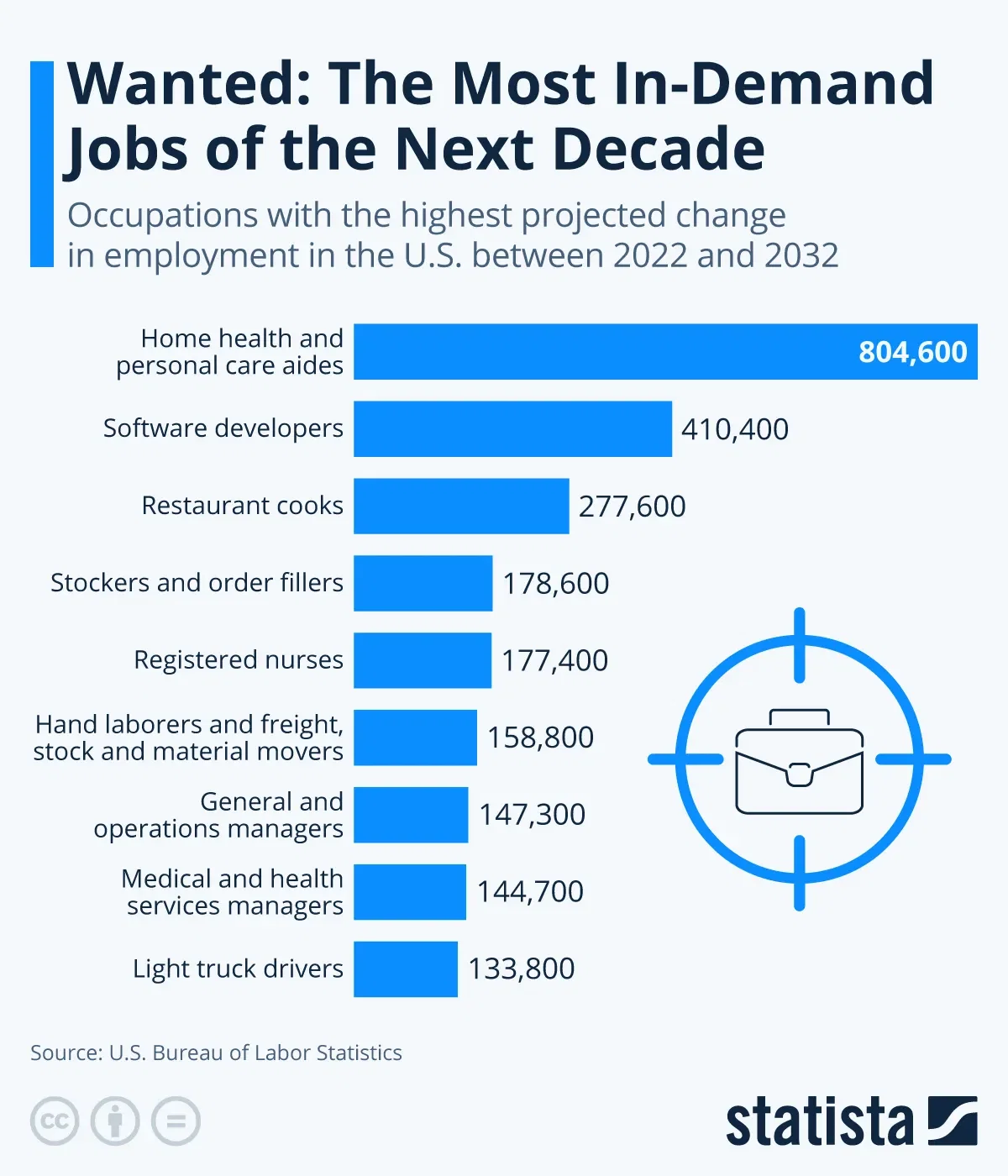
In a small town, a college student scrolls through job listings, wondering what the future holds. In a busy city, a mid-career professional thinks about switching paths. Somewhere else, a parent advises their child to choose a “secure” job, just like in the old days.
But the world has changed.
Careers are no longer fixed paths. They are moving roads, shaped by technology, global challenges, and human needs. What is in demand today may evolve tomorrow, and new opportunities are appearing faster than ever before.
Between 2026 and 2030, the global job market will not be defined by one industry or one type of skill. It will be shaped by a mix of innovation, sustainability, and human connection. If you look closely, you can already see where things are heading.
Let’s explore that future together.
Technology Careers Leading the Global Shift
Technology is at the center of almost every major change happening in the world.
Artificial intelligence is now part of everyday life. From chatbots to recommendation systems, it is helping businesses operate smarter and faster. This is why AI Engineers and Machine Learning Specialists are in high demand across countries. They are building systems that can learn, adapt, and improve over time.
But AI cannot work without data. Every action we take online creates information, and companies need experts who can understand it. This brings Data Scientists and Data Analysts into the spotlight. Their role is to turn raw data into meaningful insights that guide decisions.
Cloud computing is another major shift. Instead of storing information on local systems, businesses are moving everything to online platforms. This creates opportunities for Cloud Engineers and Cloud Architects who design and manage these systems on a global scale.
As digital systems grow, so do the risks. Cyber attacks are becoming more frequent and more sophisticated. This makes Cybersecurity Experts one of the most critical roles worldwide. They protect sensitive data, financial systems, and even national infrastructure.
Software development continues to evolve as well. It is no longer limited to tech companies. Every industry—from healthcare to agriculture—needs digital tools. This keeps Software Developers and Full Stack Engineers in constant demand.
Another growing field is immersive technology. AR and VR Developers are creating interactive experiences for education, training, entertainment, and business. What once felt like science fiction is slowly becoming part of everyday life.
Automation is also expanding across industries. Factories, warehouses, and even services are using smart machines to improve efficiency. This creates demand for Robotics Engineers and Automation Specialists who can build and maintain these systems.
Across the globe, technology careers are not just growing—they are becoming essential.
Human-Centered Careers That Continue to Grow
Even in a digital world, human needs remain at the core of every society.
Healthcare is one of the strongest and most stable career sectors worldwide. Growing populations and longer life spans mean that countries need more Doctors, Nurses, Medical Technicians, and Healthcare Workers. Alongside them, Health Tech Professionals are combining medical knowledge with digital tools to improve patient care.
Mental health is gaining recognition across cultures. Life is becoming more demanding, and people are more aware of emotional well-being. This is why Psychologists, Therapists, and Counselors are increasingly in demand globally.
Education is also evolving rapidly. Online learning platforms are reaching students in remote areas, and digital classrooms are becoming common. This creates opportunities for Online Educators, Instructional Designers, and EdTech Specialists who can deliver learning in new and engaging ways.
Content creation has become a global career. People are sharing ideas, stories, and knowledge through videos, blogs, and social media. This fuels demand for Content Creators, Digital Marketers, and Social Media Strategists.
User experience is another growing focus. As digital products become more common, businesses need to ensure they are easy to use. This brings in UX/UI Designers, who shape how people interact with technology.
Organizations are also paying more attention to their workforce. Employee well-being, diversity, and growth are becoming priorities. This increases demand for Human Resource Professionals and Talent Development Managers.
These careers show that while technology can assist, it cannot replace the human touch.
Careers Shaped by Global Challenges and Opportunities
The future of work is also being shaped by the challenges the world faces.
Climate change is one of the biggest global concerns. Countries are investing in cleaner energy and sustainable practices. This creates demand for Renewable Energy Specialists, including solar, wind, and environmental engineers.
Sustainability is becoming a key focus for businesses. Companies are trying to reduce waste and operate responsibly. This leads to roles for Sustainability Consultants who help organizations adopt eco-friendly strategies.
Agriculture is also changing. Farmers are using data, sensors, and smart tools to improve productivity. This opens opportunities for AgriTech Specialists, who combine traditional farming knowledge with modern technology.
Global trade and e-commerce are expanding rapidly. Products move across countries every day, making logistics more complex. This increases the need for Supply Chain Managers and Logistics Experts who can manage these operations efficiently.
Finance is entering a digital era. Online payments, digital currencies, and financial technology are changing how money works. This creates demand for FinTech Professionals, including analysts and developers who understand both finance and technology.
Entrepreneurship is growing worldwide. People are starting businesses, freelancing, and building online brands. This means skills like marketing, product development, and business strategy are becoming more valuable.
Another interesting area is advanced science and space technology. As countries invest in research and exploration, careers like Aerospace Engineers and Space Scientists are gaining importance.
Finally, as industries continue to evolve, there is a growing need for people who can guide change. This creates roles for Business Analysts, Strategy Consultants, and Innovation Managers who help organizations adapt to new realities.
The next five years will not be about choosing a “perfect” career. They will be about staying flexible and ready to learn.
A student in one country and a professional in another may have completely different paths, but they share one thing in common—the need to adapt. The jobs that will be in demand are not just defined by titles, but by skills.
Problem-solving, communication, creativity, and the ability to learn new tools will matter more than ever. Technology will continue to grow, but so will the importance of understanding people and solving real-world problems.
If there is one lesson to take from this journey, it is this: the future is not something to fear. It is something to prepare for.
Because in the end, the careers that will be in demand are not just about what the world needs.
They are about what you are willing to become.